

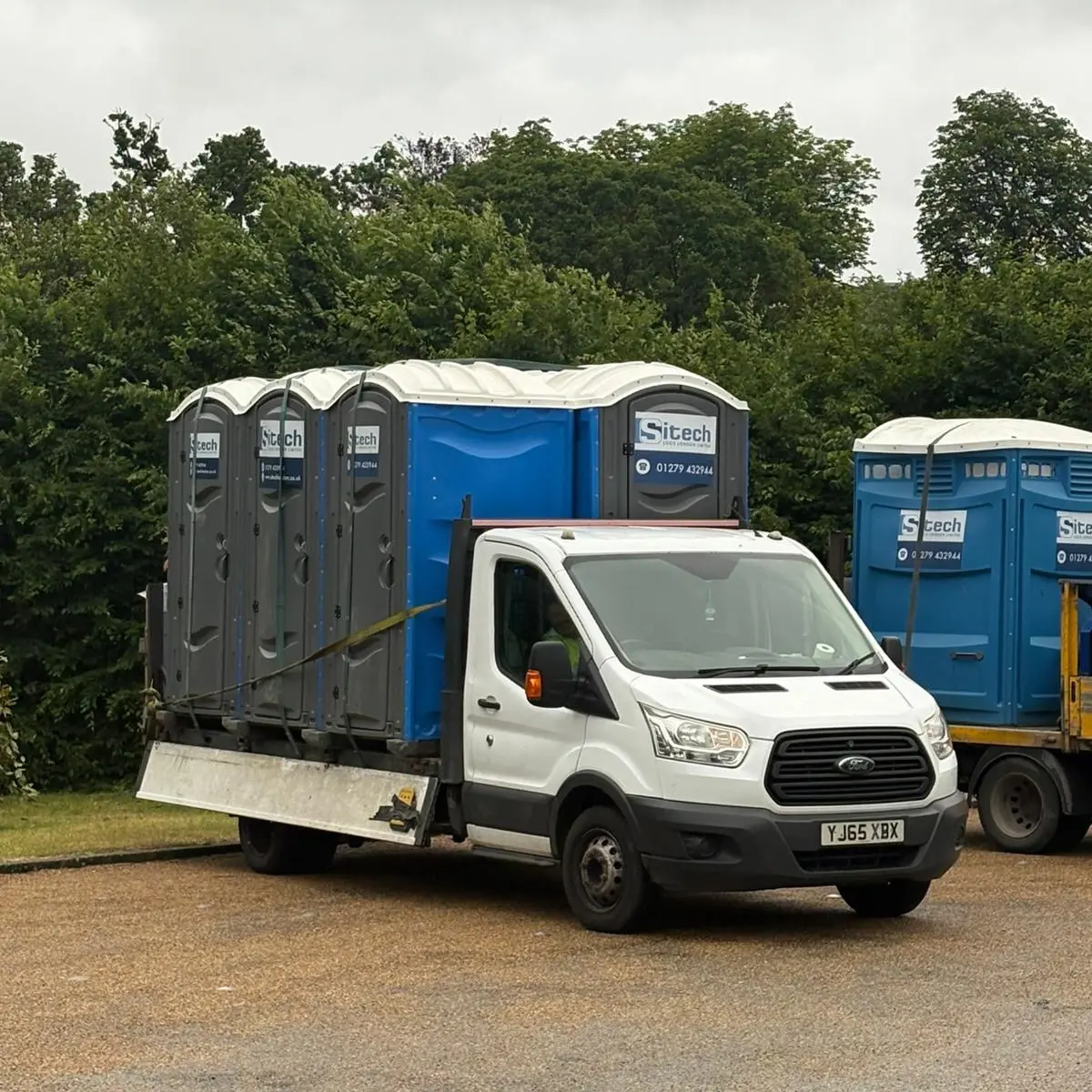
Temporary Toilets: Quick Answer
🎯 Quick Answer
Temporary toilets are portable sanitation units hired for construction sites, events and remote locations where permanent plumbing isn’t available. Most are self-contained chemical units that store waste in a holding tank and are serviced weekly, while mains-connected units link to water and drainage for a true flush. UK businesses almost always hire rather than buy, because hire includes delivery, servicing and licensed waste disposal.
- Two main types: Self-contained chemical units and mains-connected units
- Servicing: Weekly for chemical units; routine cleaning for mains
- Legal driver: CDM 2015 welfare rules on construction sites
- Sizing rule of thumb: Around one toilet per seven workers
Read on for the full breakdown of types, costs, compliance and how many units you actually need.
Hiring temporary toilets sounds simple until you’re standing on site working out how many units you need, which type suits your ground conditions, and whether the service truck can even reach them. Get it wrong and you risk queues, hygiene complaints and welfare failures during an HSE inspection.
At Sitech Loos London, we’ve supplied portable welfare across London and the South East for years. This guide walks through everything that matters: the types available, the rules that apply, realistic costs, and the access and servicing details that quietly decide whether a project runs smoothly.
ℹ️ Transparency: This article explains temporary toilet hire based on UK welfare regulations and our hands-on experience on construction sites and at events. Pricing figures are indicative hire ranges, not fixed quotes. Regulatory points are referenced to official sources, listed at the end.
Table of Contents
- What Are Temporary Toilets and When Do You Need Them?
- Types of Temporary Toilets Available for Hire
- Chemical vs Mains-Connected Temporary Toilets
- How Many Temporary Toilets Do You Actually Need?
- What Are the Legal Requirements for Temporary Toilets?
- How Much Does Temporary Toilet Hire Cost?
- What Site Access Do Temporary Toilets Need?
- Disabled Access and Accessibility
- Service and Maintenance
- Frequently Asked Questions
- Conclusion
- References
What Are Temporary Toilets and When Do You Need Them?
Temporary toilets are portable sanitation units that provide a toilet and hand-washing facilities wherever permanent plumbing isn’t available. They serve three main commercial uses: construction site welfare, events such as festivals and weddings, and remote operations like roadworks, utilities maintenance and agricultural work.
The trigger is almost always the same: people are working or gathering somewhere without mains sanitation, and someone is legally responsible for their welfare. On construction sites that responsibility is formalised by the welfare rules covered later in this guide. At events it’s about capacity, comfort and licensing conditions.
Two broad rental categories cover most needs. Chemical units are self-contained, storing waste in a holding tank and using a fresh-water or chemical flush, with a weekly service visit. Mains-connected units link to a water supply and drainage so waste leaves the site continuously, removing the need for regular pump-outs.
Hire duration usually decides which makes sense. Short events and quick projects favour self-contained chemical units that arrive ready to use. Long-running sites lean towards mains-connected installations, where avoiding weekly tanker visits saves both money and disruption over time. For a deeper comparison, see our chemical vs mains connected portable toilets guide.
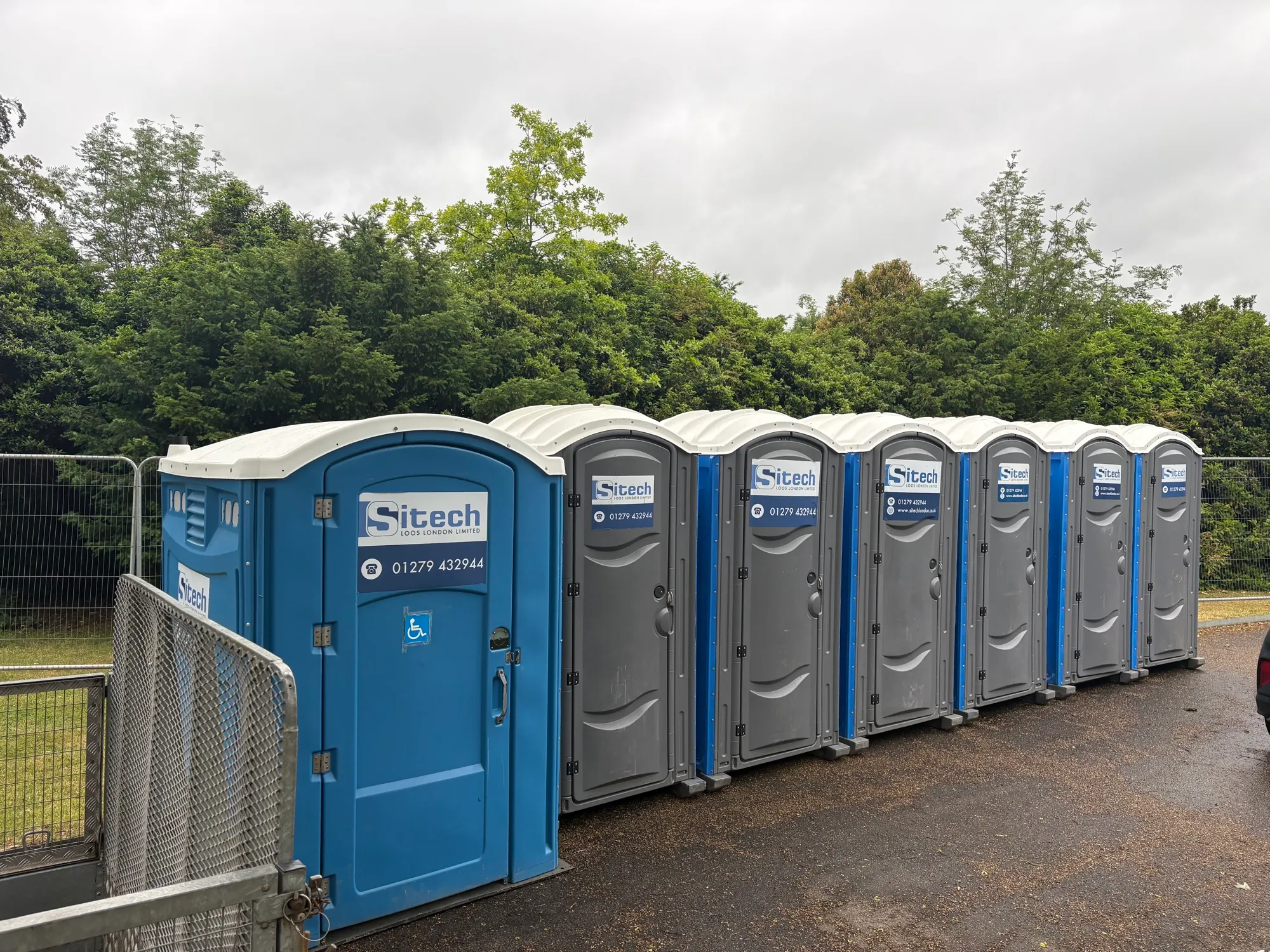
A note from Phil Mosley, Founder & Director
One recent job sums up how we approach temporary toilets. In June we supplied the BBC Antiques Roadshow with six event portable toilets and one disabled access unit, fully managed across the whole weekend. A high-profile public event leaves no room for “drop and go”: we planned delivery, servicing and collection around tight, restricted access windows so the facilities were clean, well-stocked and guest-ready before the first visitors arrived, and stayed that way until the last person left. Whether it’s a building site or a BBC event, the standard never changes, properly managed, not just delivered.
Types of Temporary Toilets Available for Hire
There’s more choice than most people expect. The right unit depends on user numbers, site access, how long you need it, and whether comfort or compliance is the priority. Here’s how the common UK hire options compare.
| Type | Typical footprint | Capacity | Servicing | Weekly hire (ex VAT) |
|---|---|---|---|---|
| Standard chemical | 1.2m × 1.2m | ~240L waste tank | Weekly, included | £32–£75 |
| 110V hot water | 1.2m × 1.2m | ~240L waste tank | Weekly, included | £44–£62 |
| Disabled access | 1.57m × 1.57m | 132L waste tank | Weekly, included | £75–£120 |
| 240V mains connect | 1.5m × 1.2m | Direct to drain | Routine cleaning | £65–£70 |
| Luxury / event trailer | 3.5m × 2.2m | Fresh + waste tanks | Weekly, included | On request |
Rates are per unit, per week, exclude VAT and include weekly servicing. Delivery and collection are charged per job, not per unit. London, and the congestion zone in particular, sits at the top of each range; scaffold-mounted units are available for tight London sites.
Chemical Units
The standard, self-contained workhorse. A fresh-water or recirculating flush sits above a sealed waste tank treated with biocide chemicals. They need no utilities, position in minutes, and suit construction sites and short-term hire. The Maxim 3000 is a typical example.
Mains-Connected Units
These link to a water supply and drainage for a true flush and effectively unlimited capacity. They take longer to install and need utilities on site, but remove weekly waste pump-outs, which makes them efficient on long projects. See the 240V mains unit for specifications.
Disabled Access Units
Larger units sized for wheelchair access, with a low-threshold entrance, grab rails and room to turn. Construction sites and public events with disabled workers or visitors need at least one. The disabled access toilet lists the full specification.
Luxury and Event Units
Premium trailers with porcelain fixtures, hot water and interior lighting, aimed at weddings, corporate events and festivals where guest comfort matters. For event planning, our outdoor event sanitation guide goes into capacity and placement.
Chemical vs Mains-Connected Temporary Toilets
The single biggest decision when hiring is connection type, because it shapes cost, servicing and where units can go. Chemical units are self-contained and flexible; mains-connected units are higher capacity but depend on utilities. The table below sums up the trade-off.
| Chemical | Mains-connected | |
|---|---|---|
| Water source | Internal fresh-water tank | 15mm mains connection |
| Waste | Sealed holding tank, serviced weekly | Direct to sewer or septic tank |
| Install | Level ground, vehicle access | Plumbed-in water and drainage |
| Best for | Short-term, remote, no utilities | Long-term sites with utilities |
Chemical units win on flexibility. They arrive ready to use, need nothing but firm, level ground and tanker access, and work anywhere. The limit is capacity: a holding tank only lasts so long, so busy units need more frequent servicing, and at high user numbers that means twice-weekly visits.
Mains-connected units win on capacity and running effort. Because waste leaves continuously, there are no tank-overflow worries and no weekly pump-outs, just routine cleaning and consumables. The catch is setup: you need water, drainage and often power, plus a longer install. Where sewer access isn’t available, a mains unit can run to a temporary septic tank emptied via professional septic tank emptying.
For winter projects, hot water becomes the deciding factor for hand hygiene. Our 110V hot water toilet hire guide explains why, and the 110V hot water unit is built for cold-weather sites.
How Many Temporary Toilets Do You Actually Need?
This is where most plans go wrong. There’s no fixed number in UK law: CDM 2015 simply requires “suitable and sufficient” facilities. Industry guidance based on BS 6465 commonly applies a ratio of around one toilet per seven workers, but that ratio assumes staggered use across a standard shift.
The problem is peak demand. A 21-worker site looks like it needs three toilets on paper, but if the whole crew breaks for lunch at the same moment, three units can’t clear 21 people quickly without queues. Size provision around your busiest 30 minutes, not your average hour.
Several real-world factors push true demand above the textbook ratio:
- Simultaneous breaks concentrate usage into short windows
- Longer shifts mean more visits per person per day
- Hot weather increases fluid intake and toilet trips
- Mixed-gender sites often need separate provision, not just more units
Events follow completely different maths. Attendees stay for hours, drink steadily and don’t disperse to other facilities, so per-person usage is far higher than on a construction site. A large festival needs provision sized for sustained, simultaneous demand, which is why event hire is planned around attendee numbers and event length rather than a worker ratio.
If you’re unsure, our team will size provision against your peak headcount and site duration. The honest answer is that under-provision is a common, avoidable cause of welfare complaints, so it’s worth a few minutes of planning.
What Are the Legal Requirements for Temporary Toilets?
On construction sites, temporary toilets aren’t optional. Schedule 2 of the Construction (Design and Management) Regulations 2015 requires every site to provide suitable and sufficient sanitary conveniences and washing facilities, kept clean and properly ventilated and lit (legislation.gov.uk).
The regulations set out clear principles rather than a rigid checklist of numbers:
- Flushing where practicable. Flushing toilets connected to mains drainage are preferred. Where mains connection isn’t reasonably practicable, chemical units are acceptable.
- Washing facilities alongside. Toilets must be accompanied by washing facilities with clean water, soap and a means of drying, close to the toilets and to changing areas.
- Suitable and sufficient. Provision must reflect the number of people on site, with separate facilities or lockable single units where men and women work together.
The HSE’s construction welfare guidance is the practical reference for meeting these duties on site (HSE). Inadequate welfare is a real enforcement risk. Inspectors do act where provision falls short, so plan welfare before work starts, not after.
Waste disposal carries its own legal duty. Chemical toilet waste must be removed and carried by a registered waste carrier, and you should keep records of where it goes (GOV.UK). Reputable hire companies handle this as part of servicing, which is one of the strongest arguments for hiring rather than buying. For a fuller compliance walkthrough, see our construction welfare regulations 2026 guide.
How Much Does Temporary Toilet Hire Cost?
Costs vary by unit type, region and access. As a guide, our standard chemical units run from £32 a week in the regions, rising to about £40–£75 in central London. 110V hot-water units sit at £44–£62, disabled-access units at £75–£120, and 240V mains-connect units at £65–£70, all per unit and excluding VAT. Those rates include weekly servicing; delivery and collection are charged separately, per job.
Three things move the true cost beyond the base rate:
- Servicing is included. Weekly servicing is built into the hire rate, so it isn’t a separate line. Only very high-usage units that need extra visits cost more.
- Delivery and collection. Charged per job rather than per unit, usually around £30 each way, rising to roughly £40 each way inside the London congestion zone.
- Region and access. London, and the congestion zone in particular, sits at the top of each range. Scaffold-mounted units for tight London sites carry a handling premium.
The practical takeaway: always ask whether a quote includes servicing and delivery, because a low weekly headline rate with separate service charges can cost more than an all-inclusive price. For local pricing across our coverage, see our areas we serve and site toilet hire pages.
What Site Access Do Temporary Toilets Need?
The detail that catches people out isn’t the toilet, it’s getting the service truck to it. Access and ground conditions determine whether a unit can be delivered, positioned and emptied throughout the hire, and they’re easy to overlook at booking.
Service vehicles need real space. As a working guide, allow generous gate width for wheeled units and more again for larger welfare cabins, plus room for a vehicle to turn and firm ground that supports a loaded tanker. Vacuum hoses only reach so far from the truck, so a unit tucked in a far corner may be unreachable on service day.
On a 2019 Manchester residential development, I watched a £2,400 cost overrun appear because nobody checked the gate width. The luxury welfare unit wouldn’t fit through the 3.2m site entrance, so it had to be craned over the boundary wall. A five-minute measurement before booking would have avoided the whole problem.
Ground conditions matter just as much as gaps. In winter, soft ground can trap a service vehicle, so temporary roadways or track mats keep access open and protect the site. Remote or restricted locations may need tracked vehicles or manual pump-out, which adds cost. A quick site survey before the hire agreement prevents almost all of these failures, which is why we run one as standard.
Disabled Access and Accessibility
Accessibility isn’t an optional extra. The Equality Act 2010 places duties on employers and service providers to make reasonable adjustments for disabled people, which on a worksite or at an event means providing accessible welfare where disabled workers or visitors are present (legislation.gov.uk).
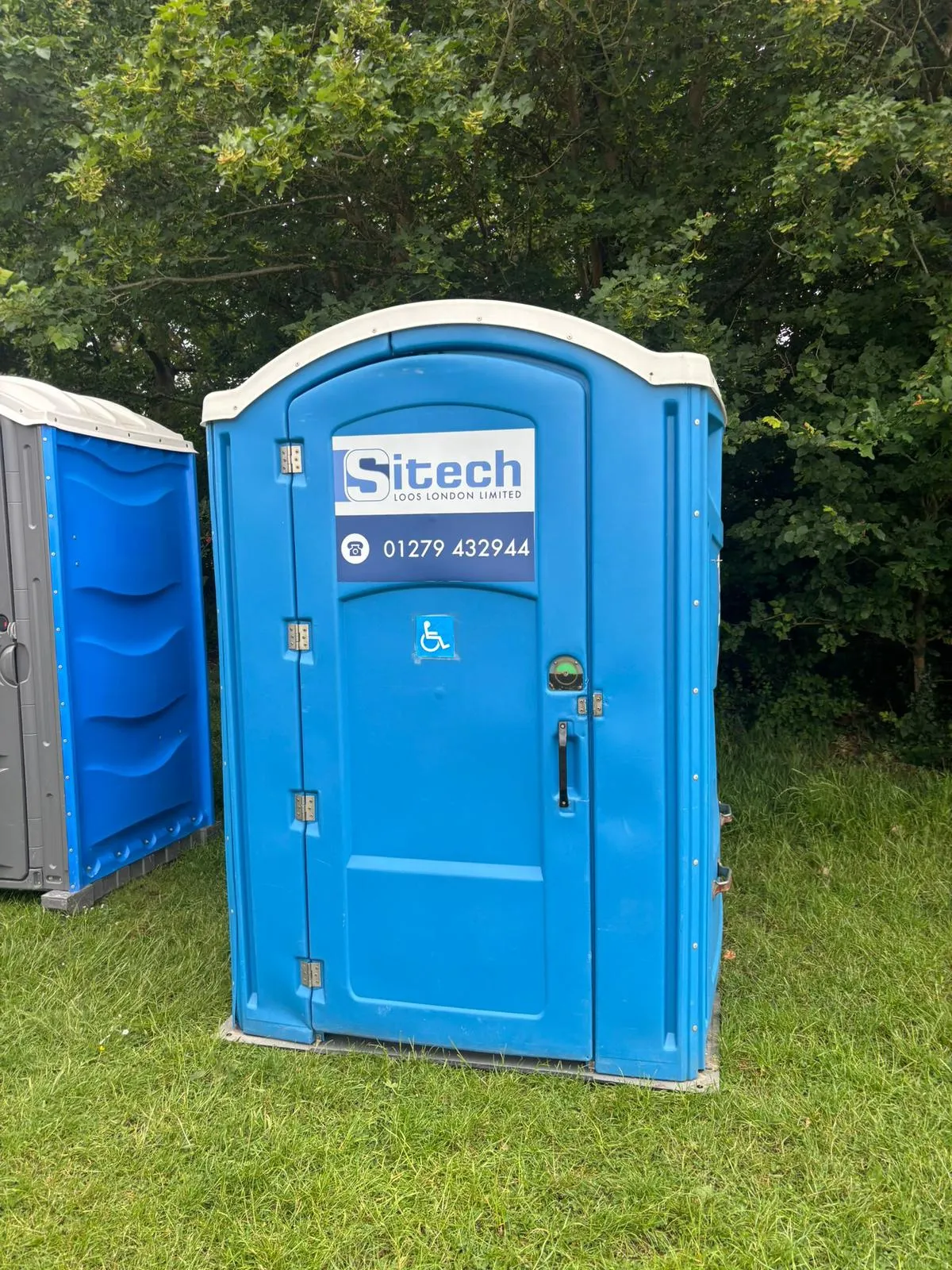
Accessible temporary toilets are larger than standard units, with a level or ramped entrance, wider doorway, grab rails and enough internal turning space for a wheelchair. Because of their size and weight, they need more delivery clearance and firmer standing ground than a standard chemical unit, so access routes have to be planned at booking, not on the day.
Availability is the practical constraint. Major urban depots keep accessible units in stock, while rural areas can see longer lead times, so book early if you know you’ll need one. Our disabled portaloo hire guide covers costs, the law and the unit’s measurements, and locations such as Surrey and London benefit from metropolitan stock and faster response.
Service and Maintenance
Regular servicing is what keeps temporary toilets hygienic, compliant and odour-free, and it’s the part you’re really paying for. A standard weekly service on a chemical unit covers everything needed to reset the unit for another week of use.
A typical service visit includes:
- Waste removal: the holding tank is vacuum-pumped into a licensed tanker
- Chemical refill: fresh biocide solution is added to control odour and break down waste
- Fresh water top-up: the hand-wash tank is refilled with clean water
- Sanitisation: seat, surfaces, handle and basin are cleaned and disinfected
- Restocking: toilet paper, soap and towels are replenished
Servicing frequency scales with usage. Quiet units may be fine weekly; busy ones need more frequent visits to avoid tanks filling before the next scheduled service. Hot weather speeds up waste breakdown and odour, which can shorten safe intervals in summer. Mains-connected units skip the waste pump-out entirely and just need routine cleaning and consumables.
Good hire companies fold all of this, including licensed waste disposal and records, into the hire price. Our portable toilet servicing is included with every hire, which removes both the hassle and the compliance risk of arranging it yourself.
Frequently Asked Questions
How often do temporary toilets need emptying?
Standard chemical units should be serviced at least once a week, which is the industry norm built into most hire agreements. High-traffic units, or any unit shared by more than around seven people, may need twice-weekly or even daily servicing. Mains-connected units drain straight to the sewer, so they only need routine cleaning rather than waste pump-outs.
How many temporary toilets do I need on a construction site?
There is no single legal number in UK law. CDM 2015 requires “suitable and sufficient” sanitary conveniences, and industry guidance based on BS 6465 commonly applies a ratio of roughly one toilet for every seven workers. Always size provision around the maximum number of people on site at peak times.
Is it cheaper to hire or buy temporary toilets?
For the vast majority of sites and events, hiring is the better option. Hire bundles delivery, weekly servicing, licensed waste disposal and maintenance into one cost, with no responsibility for storage or repairs. Buying only tends to make sense for permanent, year-round locations.
Do I legally need toilets on a construction site?
Yes. Schedule 2 of the Construction (Design and Management) Regulations 2015 requires every construction site to provide suitable and sufficient sanitary conveniences and washing facilities. Flushing toilets are preferred where reasonably practicable, with chemical units accepted where mains connection isn’t feasible.
Should I choose chemical or mains-connected temporary toilets?
Choose chemical units for short-term projects, remote sites or anywhere without water and drainage. Choose mains-connected units for long-term sites with utility access, where they remove weekly waste pump-outs and offer a true flush. The crossover point is usually project duration: chemical for weeks, mains for many months.
How much does temporary toilet hire cost in the UK?
Our standard chemical units are £32–£75 per week (around £40–£75 in London), with 110V hot-water units at £44–£62, disabled-access units at £75–£120, and 240V mains-connect units at £65–£70, all per unit, excluding VAT and including weekly servicing. Delivery and collection are charged per job (around £30 each way, more inside the London congestion zone).
Conclusion
Temporary toilets come down to matching the right unit to your site: self-contained chemical units for short-term, remote or utility-free locations, and mains-connected units for long-running sites where you’d rather skip weekly pump-outs. Whatever you choose, the fundamentals are the same: provide suitable and sufficient facilities, size them around peak demand, and keep them serviced.
The avoidable mistakes are almost always planning ones, under-provision against peak usage, and overlooking service-vehicle access. A short site survey before you book solves both.
Need temporary toilets for your project? Sitech Loos London provides fully serviced units with weekly maintenance and licensed waste disposal included as standard. Get an instant quote or call us on 01279 432 944 to discuss your site.
References
- Health and Safety Executive. Construction - Welfare - Toilets and washing. Retrieved 19 June 2026.
- Legislation.gov.uk. (2015). The Construction (Design and Management) Regulations 2015, Schedule 2. Retrieved 19 June 2026.
- Legislation.gov.uk. (2010). Equality Act 2010. Retrieved 19 June 2026.
- British Standards Institution. BS 6465 Sanitary installations. Retrieved 19 June 2026.
- GOV.UK. Register as a waste carrier, broker or dealer. Retrieved 19 June 2026.
